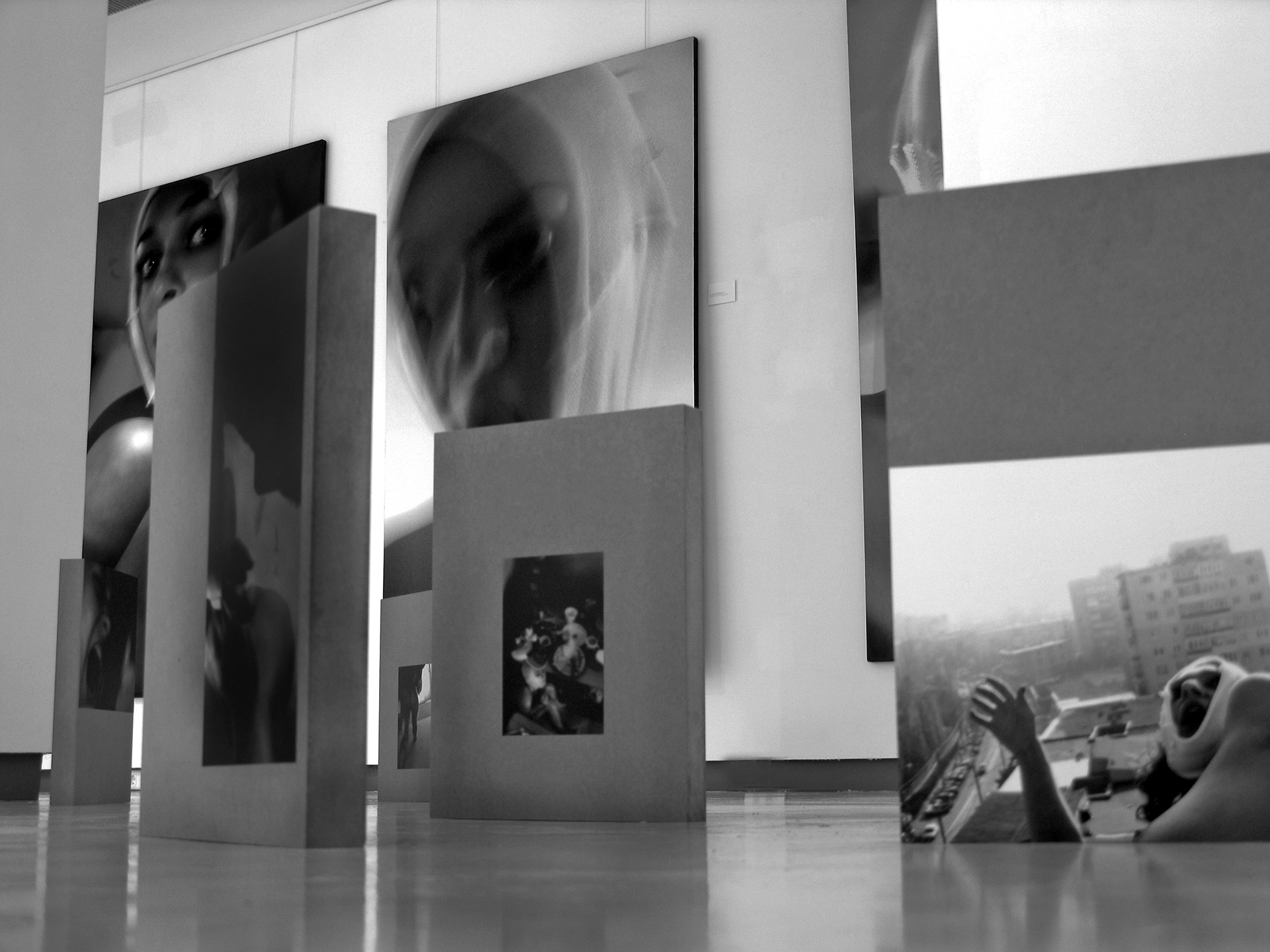
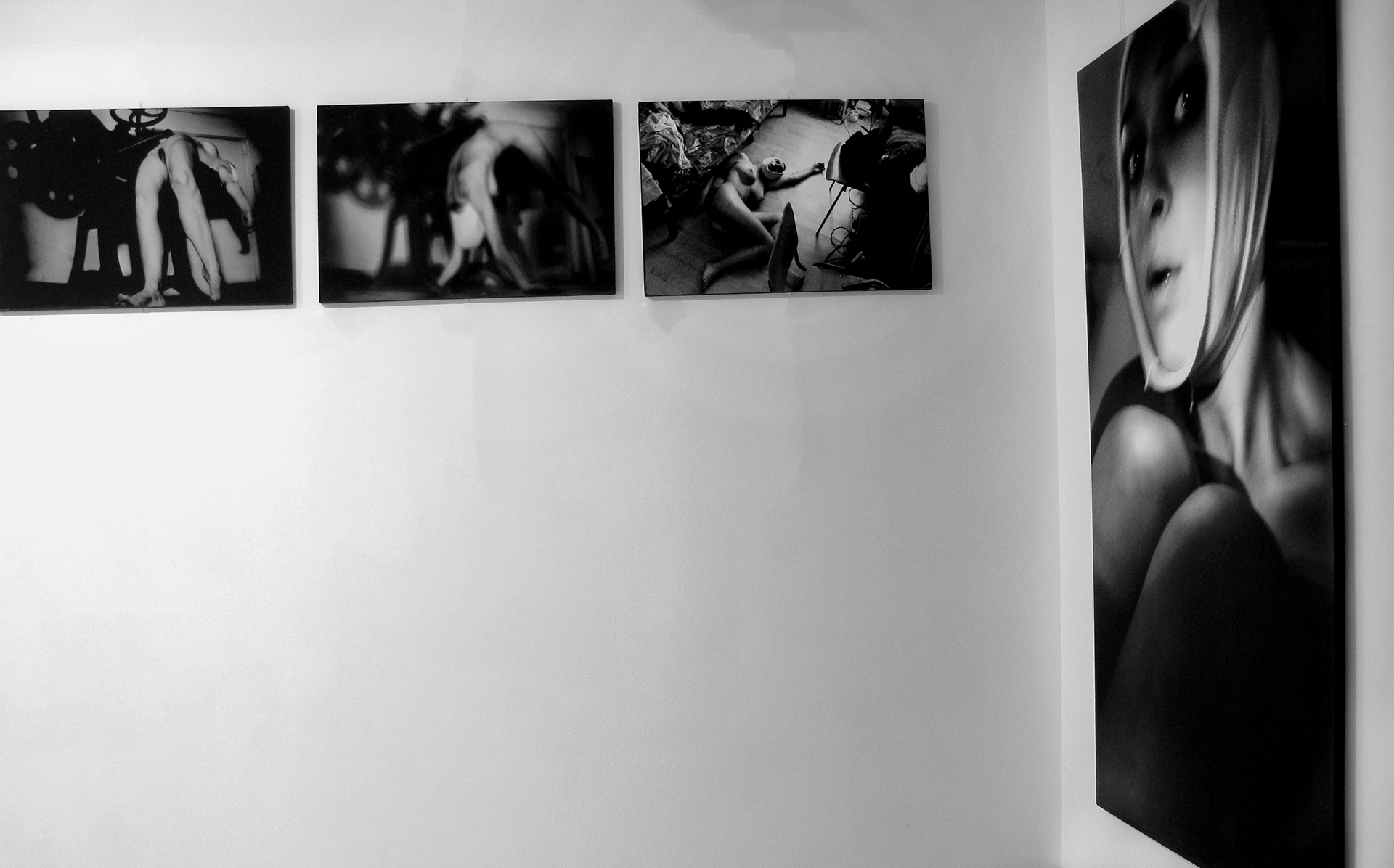
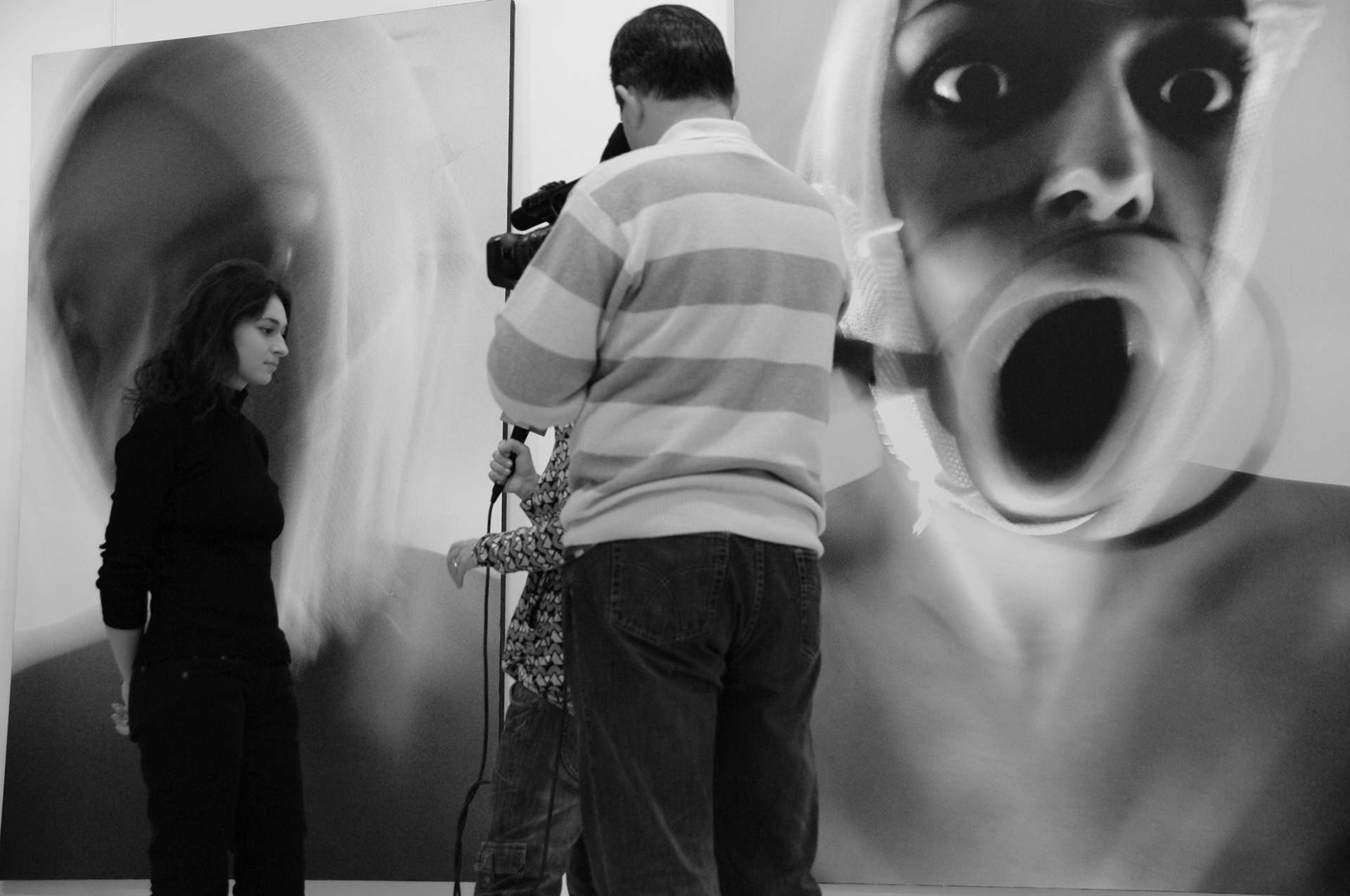
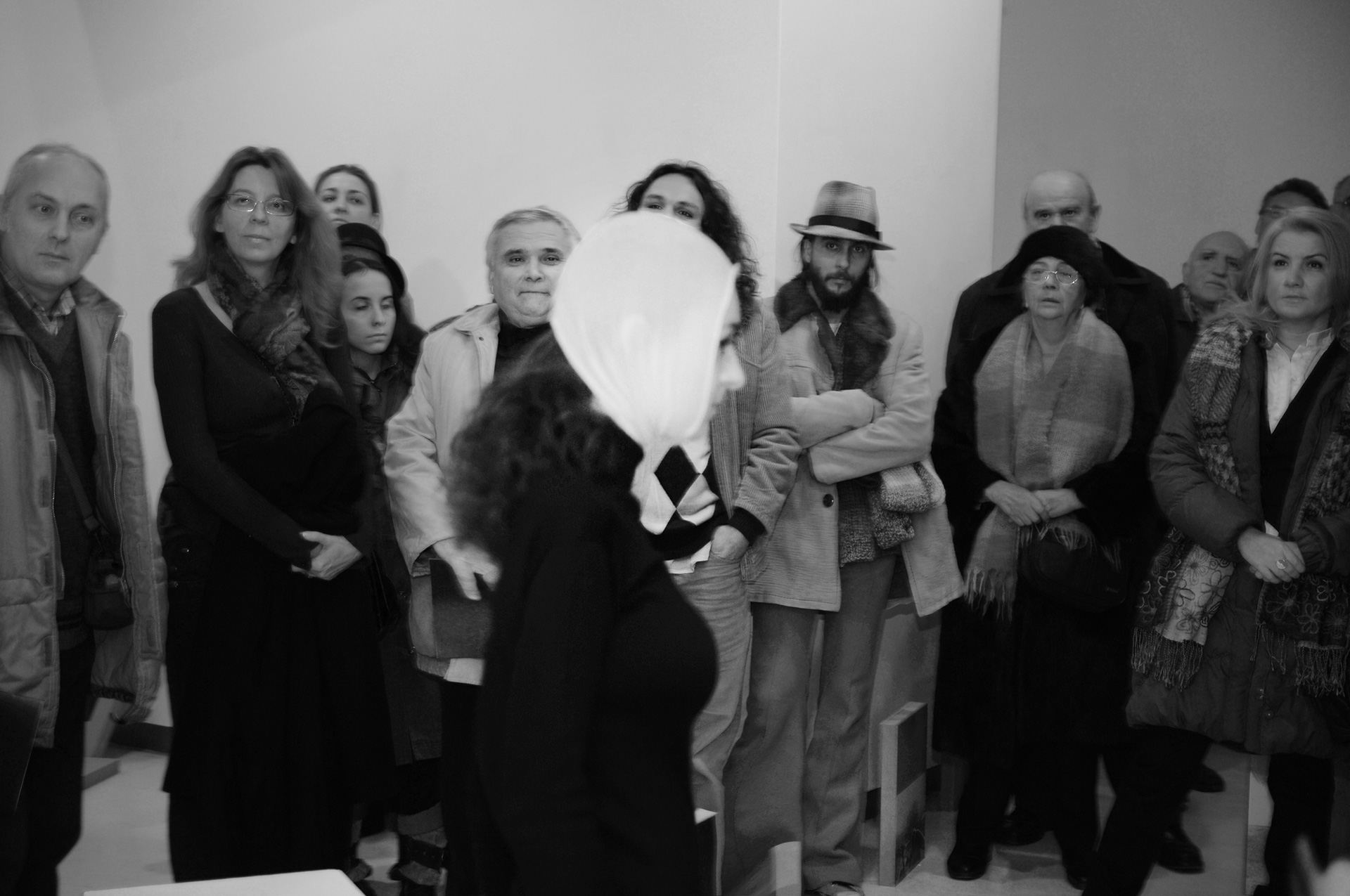
EXILS
Calina Gallery
24 January – 28 February 2008
curated by Olivia Nitis
THE TRAUMA OF BEING IN A BODY
In theories about the body, a central place is occupied by the idea of the body as a form of representation, as a product of gender technologies, as defined by Foucault and later by Teresa de Lauretis, which shape the body according to historical and socio-cultural contexts. In this sense, corporeality expresses nothing more than an identity that changes over time — that of gender — constructed through social interactions. However, the body is not merely a passive structure; it is shaped through choices, while also absorbing a vast array of influences necessary for social integration.
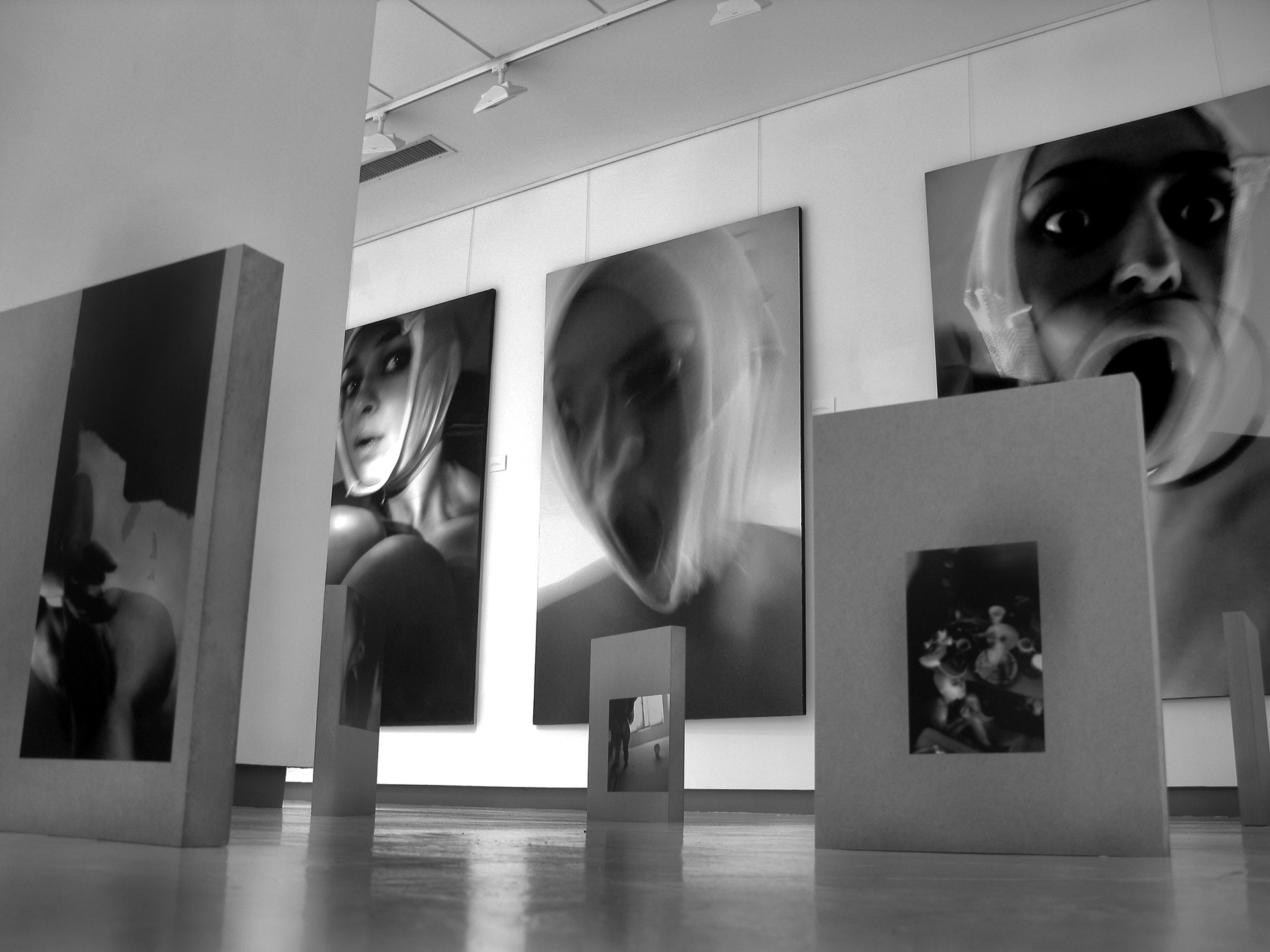
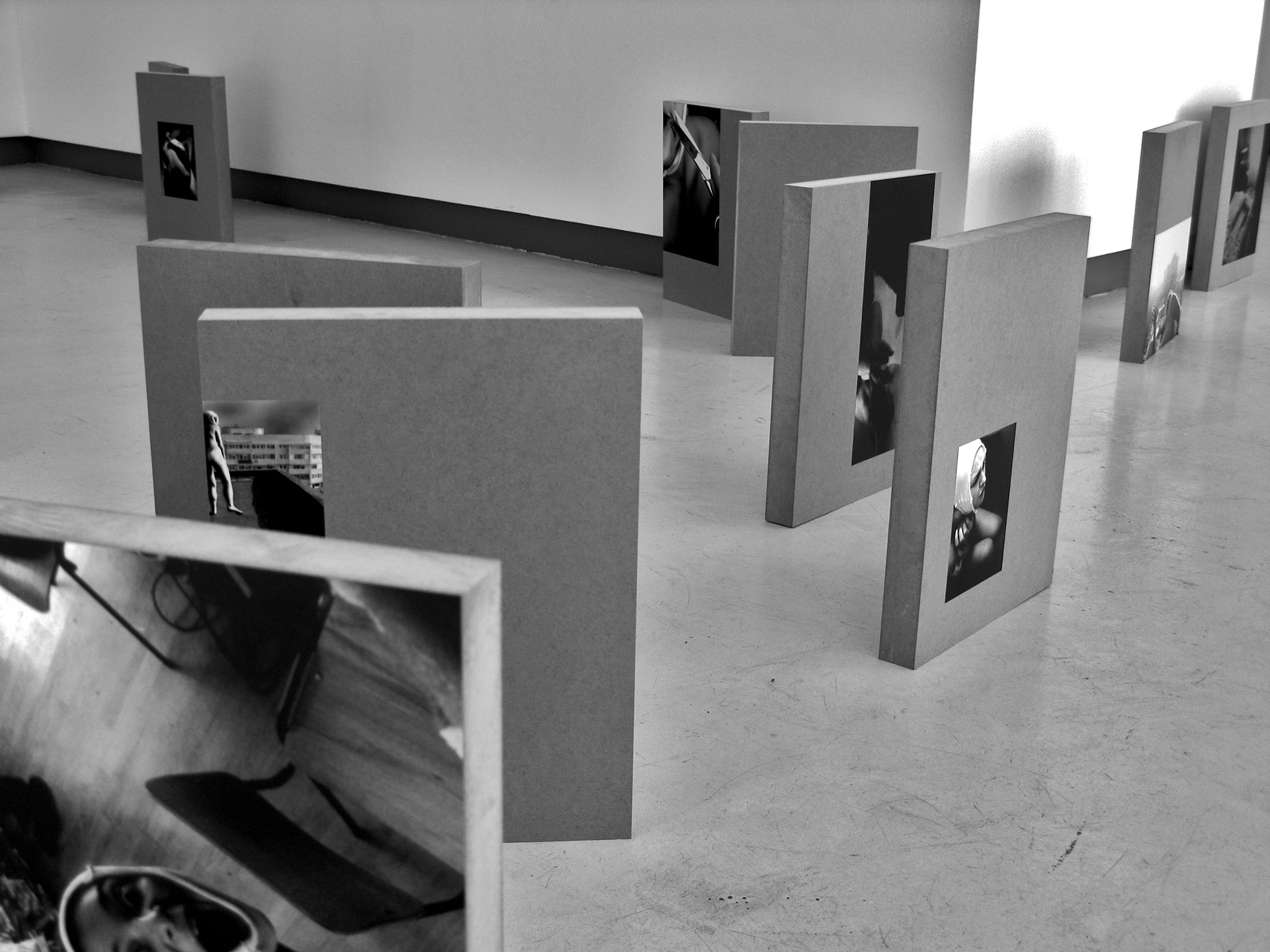
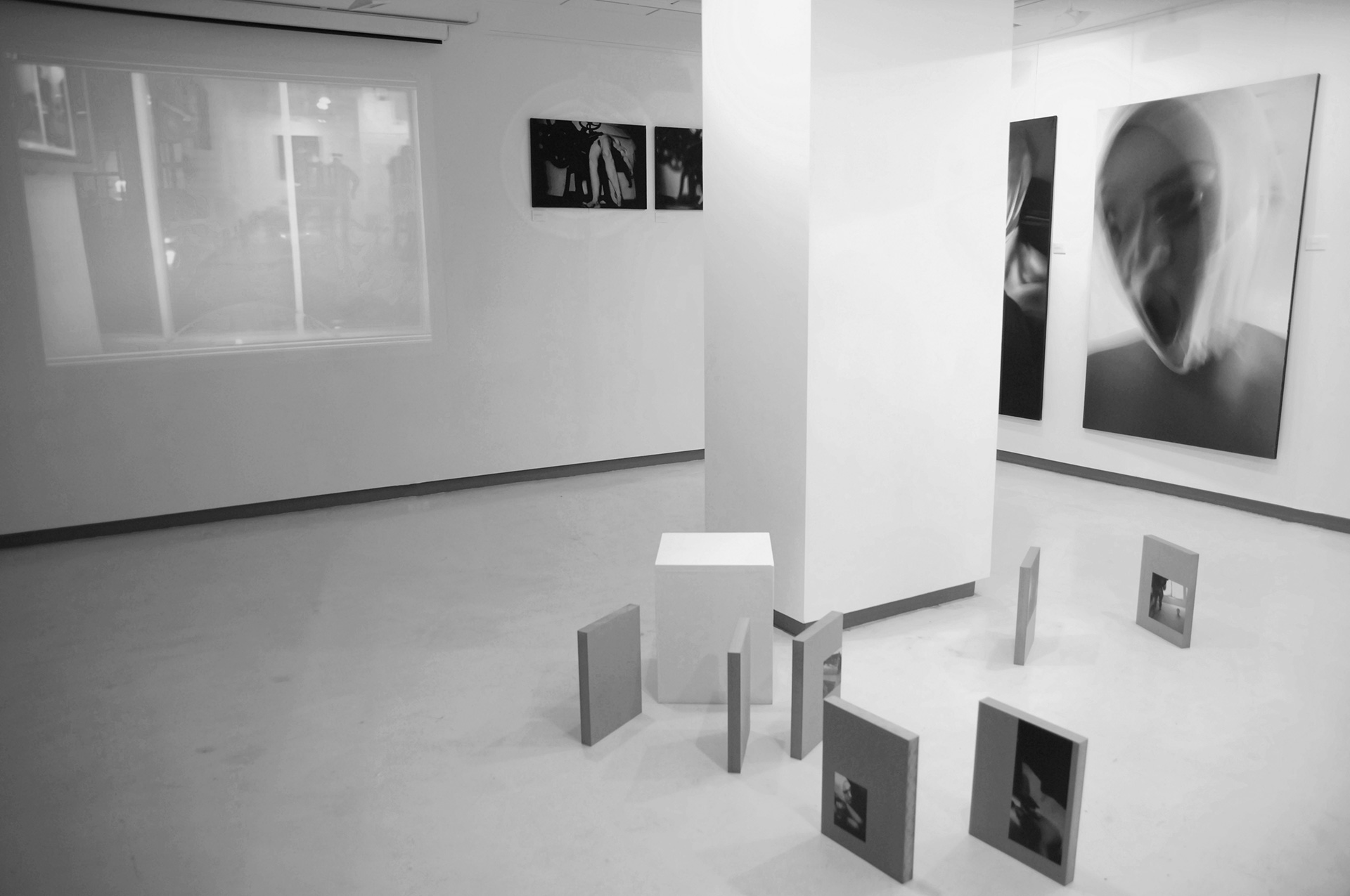
Cristina Garabetanu’s photographs investigate precisely this complex relationship between the individual and their body, with what could be described in psychoanalytic terms as the persona. The young artist engages with a field explored especially in feminist art of the 1960s and 1970s, which brought the body into focus as a cultural sign and as a repository of experiences and previously unexpressed traumas
The avant-garde created a rupture from traditional forms of art, while the Playboy culture of the 1960s significantly influenced representations of the body. Alongside feminist discourse, which uses the body to critique the loss of identity with cultural, political, and social implications, sexual liberation also introduced the image of the consuming woman — in contradiction with feminist principles, yet aligned with post-feminist directions.
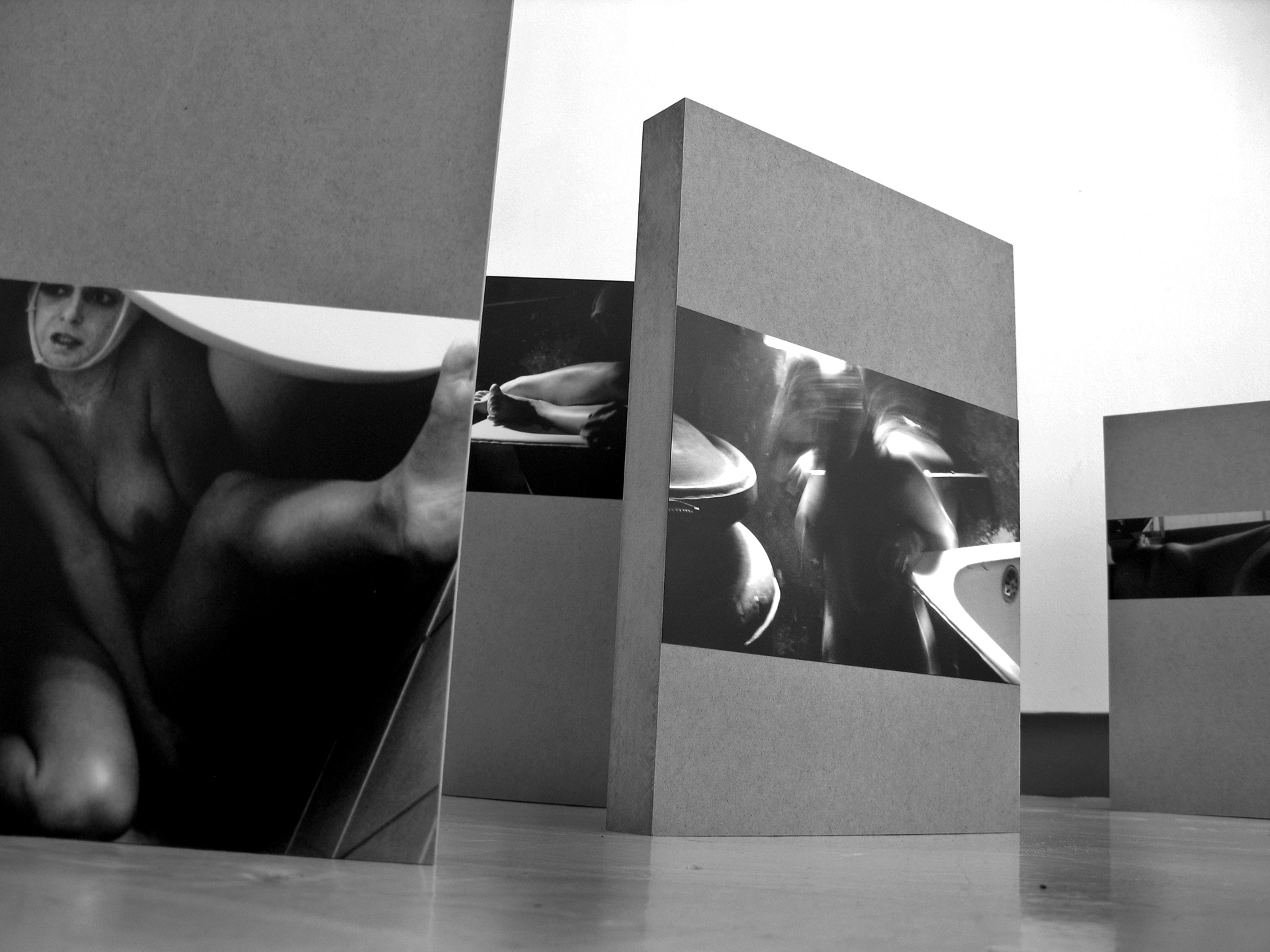
For a young artist in contemporary Romania, the assumption of an explicit approach to biological exhibition constitutes a courageous act, largely absent from the local art scene, particularly in art practiced by women, precisely because it confronts forms of censorship. The untrained viewer often reacts in a harsh and crude manner to the body stripped of its clothing conventions. As a result, such artistic expressions continue to provoke negative reactions in the local context, due to a lack of visual education.
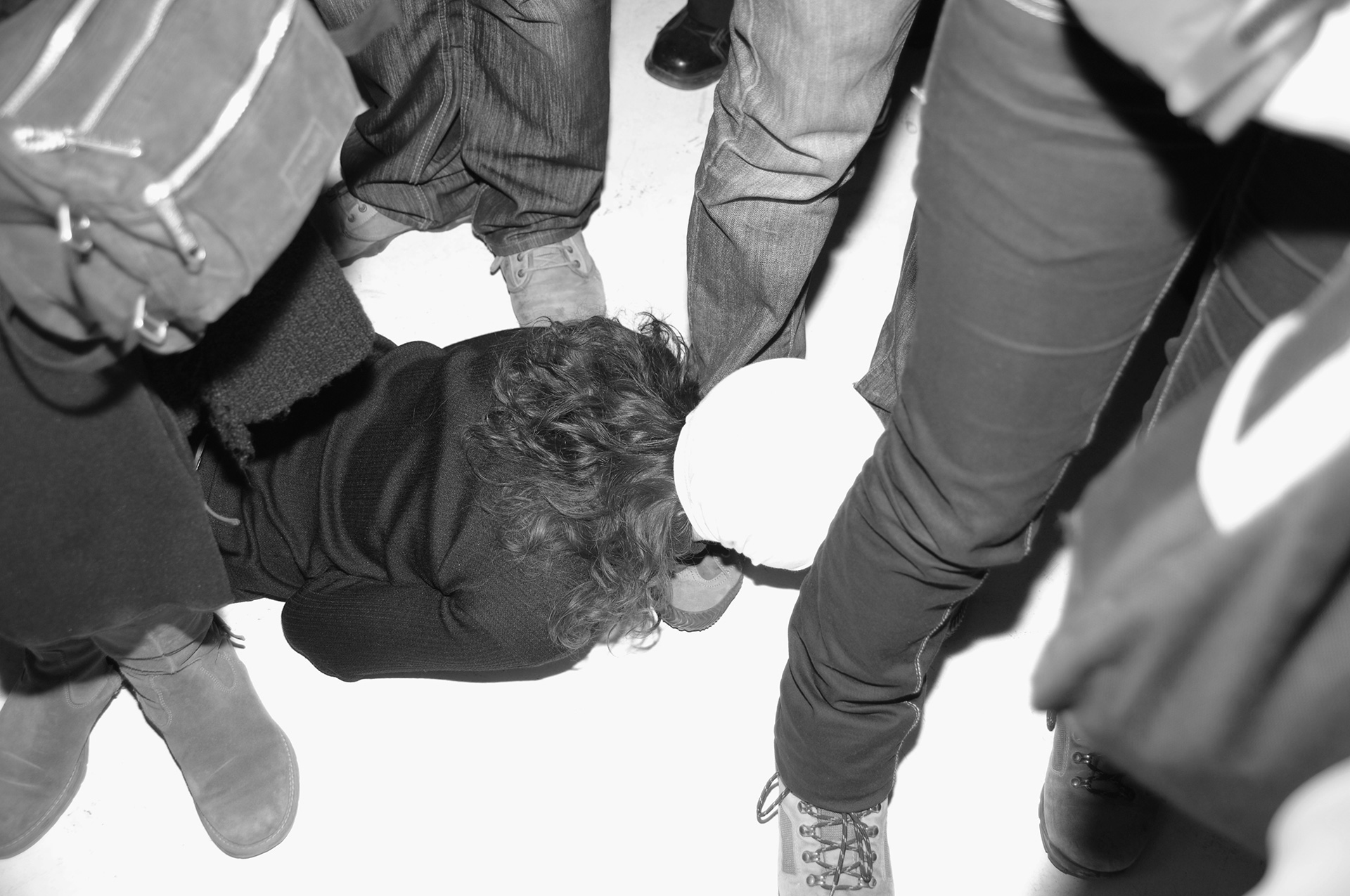
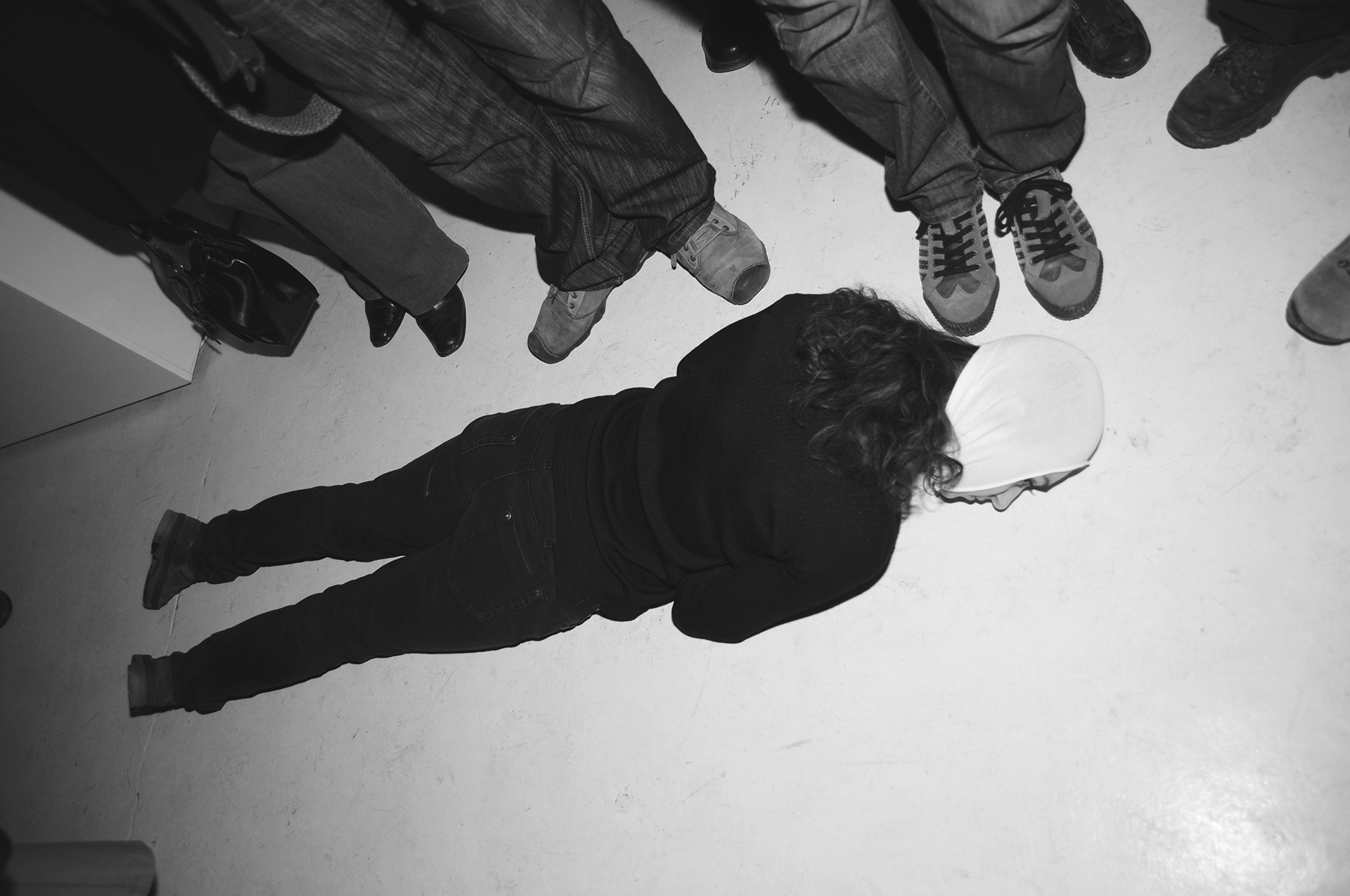
Cristina Garabetanu’s black-and-white photographs have the power to communicate trauma — a process of alienation experienced by a woman trapped within her own body. It is no coincidence that the young artist employs a self-referential discourse. This investigation of identity involves the woman as body, as biological presence, in the sense articulated by Judith Butler, building on Michel Foucault’s theories, where the body is understood as a performative element that plays a role, a surface inscribed and shaped by practices of power.
Cristina Garabetanu’s photographs are not comfortable. They exist at the threshold between direct expression and the constructed act of assuming a role, examining the effects of personal schizoidity.
The dichotomies of sexual politics of the gaze (passive/active, subject/object, etc.) no longer serve an idealistic vision of the body, but instead enter a much deeper cultural sphere within a realist-contemporary philosophy. The woman is no longer an embodiment of beauty, a passive element to be contemplated. She is her own subject. She is a human being, with a biological and psychological identity brought into question by Cristina Garabetanu in relation to social norms, the prejudices of contemporary society, and the public and private spaces that function as sites of constraint and alienation. “Know yourself” remains one of humanity’s most difficult challenges.
Cristina Garabetanu’s works contain her, while at the same time expressing the obstacles that stand in her own way.
(text by Olivia Nițiș)